Actors tell stories about working with Terry Malick, and often those stories revolve around his attempts to capture a distinctive kind of verisimilitude: the way that people behave when they’re not on camera, when they’re not being watched, when they don’t have lines. August Diehl remembers that during a long day of filming A Hidden Life he would lie down on the grass to close his eyes for a while, and then when he opened them would find a camera a few inches from his face. John C. Reilly says that during the filming of The Thin Red Line Malick would write a long speech for him, ask him to memorize it, and then ask him to speak one sentence that sums up the speech. More extreme still: Malick has sometimes asked actors who know their (extensive) lines to communicate those lines not by speaking them but but through facial expressions.
Many directors try to defeat the artificiality of acting. David Fincher had Jesse Eisenberg and Rooney Mara do 99 takes of the first scene of The Social Network. Robert Bresson didn’t even want professional actors in his films. But for Malick, connecting the filmmaking process to the real world is an obsession that takes multiple forms.
Here are two examples.
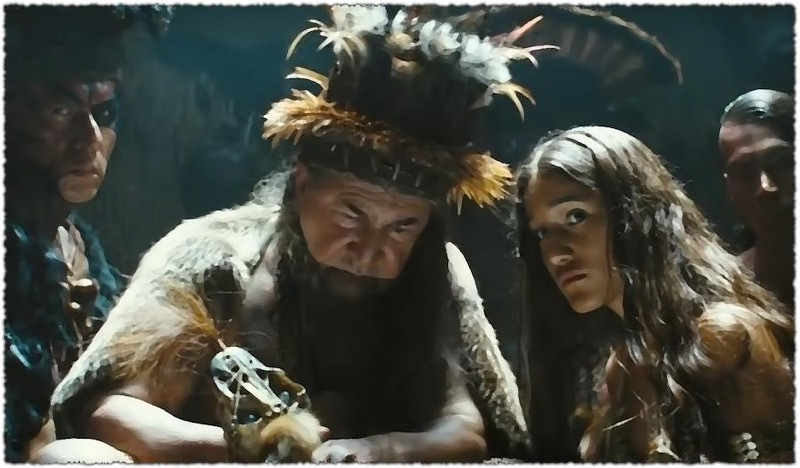
When making The New World, Malick was insistent that the Native American characters speak their own language. But there was a problem: that language, usually called Southern Algonquin or Virginia Algonquin, was lost. So he hired a linguist to reconstruct the language:
Then [Blair] Rudes had to figure out how the dialogue would be spoken in Virginia Algonquian. The only surviving vocabulary is a list of about 50 words set down by Smith himself, plus a 600-word list set down in 1612 by William Strachey, a secretary for the Jamestown colony. “Neither of them was a linguist or particularly skilled in transcribing foreign languages,” Rudes said.
What’s more, 600 words or so fell far short of the thousands needed to do justice to the “New World” dialogue. So Rudes assessed every word in the light of better-documented Algonquian languages, including the ancestral Proto-Algonquian that linguists have reconstructed through cross-language comparisons.
Rudes also had to reconstruct the grammar, based on what he knew about Algonquian languages in general. “The sentence structure and word structure differs from English in that it’s a much more inflectional language,” he said. The language has some similarities to Russian, in that there is no form of the verb “to be,” and no articles such as “the” or “a.”
When he finished his translation, Rudes spoke the dialogue in his reconstructed Virginia Algonquian, recording it on compact discs so that the actors could learn their lines in a language no one alive ever heard before.
Then, when the movie was done, Malick arranged for all of Rudes’s work to be given to the Powhatan people, so that the labor performed to make a movie more powerful could have positive effects in the real world.
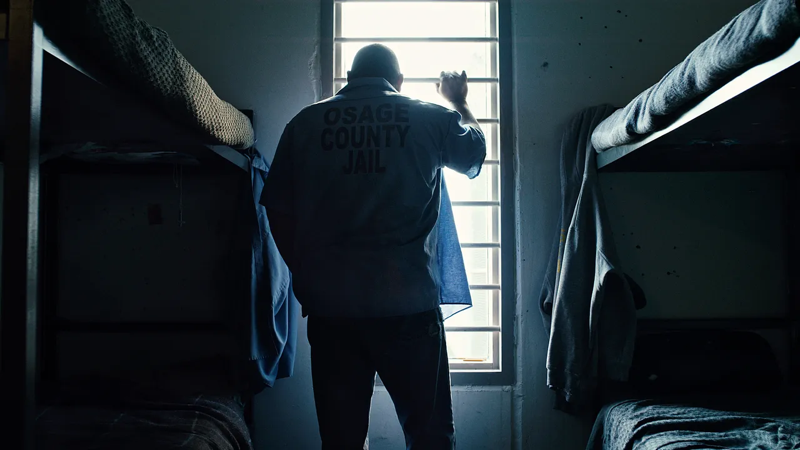
In 2010, the photojournalist Eugene Richards was hired to join the crew of Terrence Malick’s “To the Wonder,” shooting in the town of Bartlesville, in northeastern Oklahoma. In the movie, which was released in 2012, Javier Bardem plays a priest struggling with his faith. Richards — a former photographer for the storied Magnum and VII photo agencies, who has spent his career documenting subjects including poverty, mental illness, and crack-cocaine addiction — was tasked with venturing into the town and finding real residents to interact with Bardem. To locate most of his subjects, Richards got the help of a local Episcopal priest, Father Lee Stephens, who pointed him in the direction of Bartlesville residents who had sought his spiritual counsel. Bardem, dressed in his priest garb, sat with them as Richards filmed, and, as Richards puts it, “The basic question of ‘Tell me a little bit about yourself’ grew into something else.” In the end, Malick used only small slivers of the footage in his film. But Richards was so fascinated by the stories he recorded that he petitioned Malick to release the footage to him for his own use.
Malick agreed, and the resulting film is called Thy Kingdom Come. It is neither fiction nor documentary, or else it is both.
Chris Wiley, the author of the New Yorker story, asks a question about all this:
The outpouring of devastating memories and heightened emotion can give the viewer a queasy feeling that truth and fiction are joining too seamlessly. Do the interviewees know that their interlocutor is a Hollywood actor and not an emissary of God? Richards says that all were informed that they were participating it a work of fiction, and that Bardem was not a priest. ‘Most people knew him as the murderer in ‘No Country for Old Men,” Richards said. ‘A couple people knew him as Penelope Cruz’s husband. Some didn’t know who he was at all. And absolutely no one cared, in the end, who he was, except that he was there to listen.”
Bardem’s priesthood was fictional, but his listening was real. As Eugene Richards notes, “Everyone we approached was informed that Javier was not a real priest, but it didn’t seem to matter, since each of them had stories that they wanted to tell. As a young mother, who was in mourning for her dead baby, explained, ‘There are not many people who will listen.’”
Bardem himself has confirmed this account:
“Every time I got into a room with any of them, something magical happened…. They would really become a human being sharing, explaining, opening themselves up to a priest. We could go hours recording without stopping because every one of them, what they needed, was to be listened to…. I was not an actor in there. I was there for them, and I had to be empty to be filled with their statements, with their words, with their dreams, with their nightmares.”
“I went to Terry [Malick] and I said, ‘Where is that footage?’ because that was so strong and we owe those people, those amazing people that gave us their time and intimacy — we owe them. It was a big, important thing beyond movies, beyond fiction. It was a big responsibility.”
“Beyond movies, beyond fiction.” The boundaries between art and life are always porous, always in negotiation. But some artists are especially concerned to erase those boundaries.