IRL, Volume 2
During the studio era, the rules for style were embedded in concrete practice. They were just the way you did things. If you were a director, your choices were constrained by tacit but strongly felt boundaries, matters of taste and judgment as much as anything else. You could move the camera, but you shouldn’t cut in the middle of a movement. You could shoot extreme close-ups, but rarely. Every piece of action demanded one right spot for the camera, which it was your task to find. You didn’t (for reasons of economy as much as professional pride) set up four cameras to grab action haphazardly. […]
Today’s style is important to study because it has become the dominant way movies look in the United States and, indeed, in most other countries. It came into being and maintains its power by reworking earlier principles of cinematic construction.
Those principles revolve around what’s come to be called “classical continuity” because they assure that the spectator understands how the story moves forward in space and time. Establishing and reestablishing shots situate the actors in the locale. An axis of action (or “180-degree line”) governs the actors’ orientations and eyelines, and the shots, however different in angle, are taken from one side of that axis. The actors’ movements are matched across cuts, and typically the closest shots are reserved for the most significant facial reactions and lines of dialogue. Crosscutting may juxtapose various strands of action by alternating among them, shaped by dramatic relevance and often the pressure of a deadline.4 U.S. directors settled on this synthesis of staging, shooting, and cutting techniques in the years after 1917, and its premises became the basis of an “international film language” for entertainment cinema.
Terry Malick doesn’t care about classical continuity — not when classical continuity is the enemy of Life.
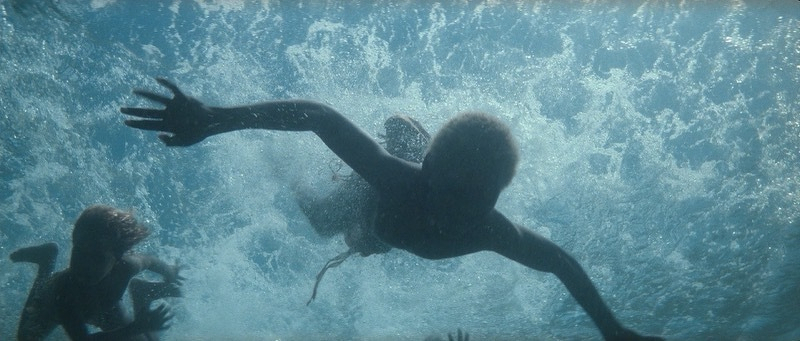
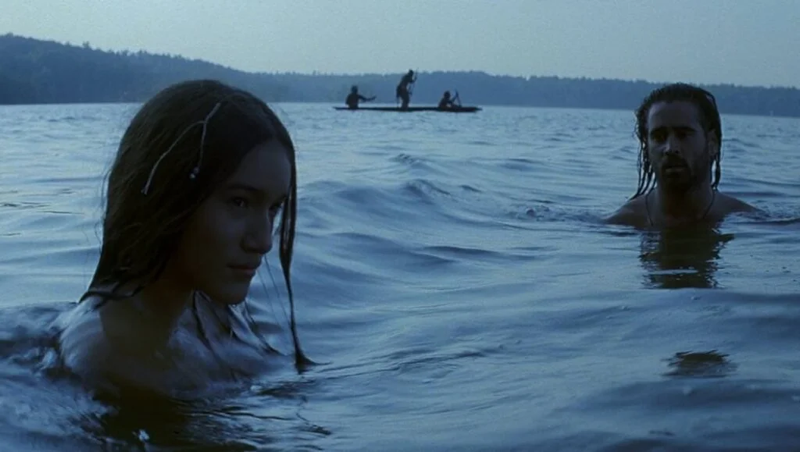
In an interview accompanying the Criterion edition of The New World, the editor Mark Yoshikawa tells a story about working with Malick to re-cut the opening scene of the movie, in which the young Native American women — the Rhine-Maidens of this new world – are swimming in the James River. Yoshikawa was showing Malick a new cut, and saw to his embarrassment that he had one of the women swimming in one direction and then, after a cut, swimming in the opposite direction. “Terry, I’m so sorry, I flipped the image, I’ll go back and fix it.” And Malick said, “Oh, I love it, I love it.” What he loved about it is that it felt like life — it felt more real to him, more faithful to how we experience or perhaps how we remember things, than a cut that adhered to the established conventions would.
Yoshikawa, at several points in his interview, talks about how intensely Malick cherishes that feeling of life, whenever and wherever he can find it. But he also says, “The grass is always greener” — for him as an editor. He said that when he was working with Malick he was always wishing he had more explicit instructions from the director, wishing he had a fixed script to work to, etc. But, he says, as soon as he left working on The New World and went to his next editing assignment, and he was working from a script, working from very specific editorial directions, he thought: “Where’s the life?”
Editing for life — not David Copperfield’s “reading for life,” but editing for life, that’s what Malick wants from his editors, from the whole process of editing.
Here’s Colin Farrell, from the same Criterion edition (slightly edited for clarity):
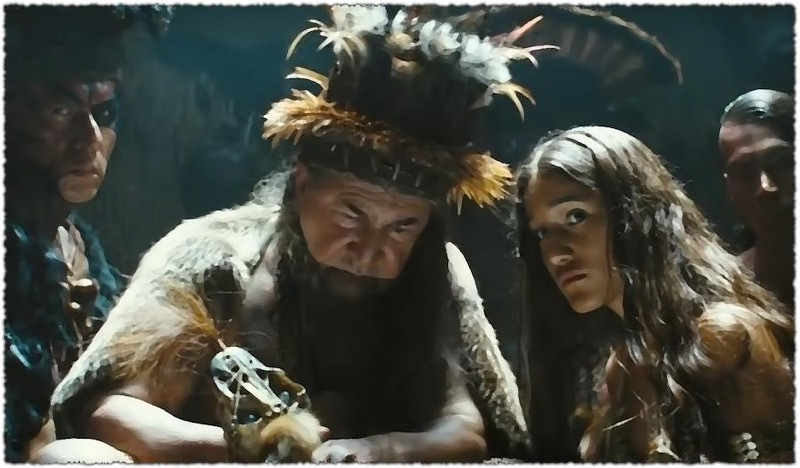
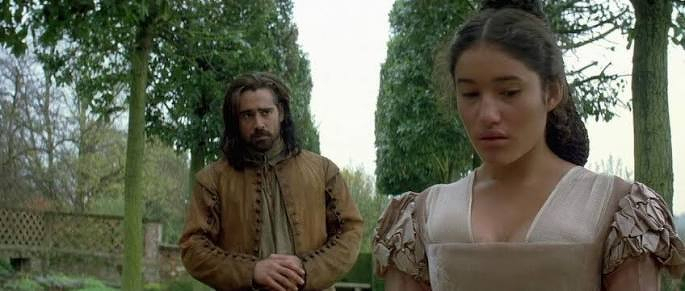
You know, [in the scene when I was] coming into Powhatan’s village blindfolded, there had to be a sense of choreography there, but again, if something is too structured, if something is too premeditated, it turns Terry off. There’s a distinct lack of capturing life on the fly that’s made apparent with something strictly choreographed, and that’s not what Terry’s about.
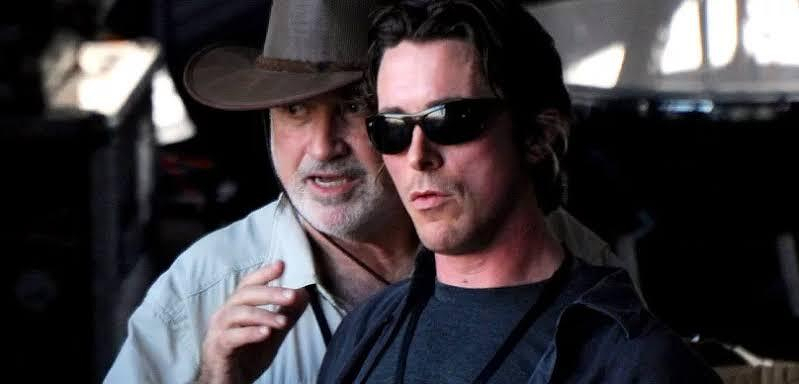
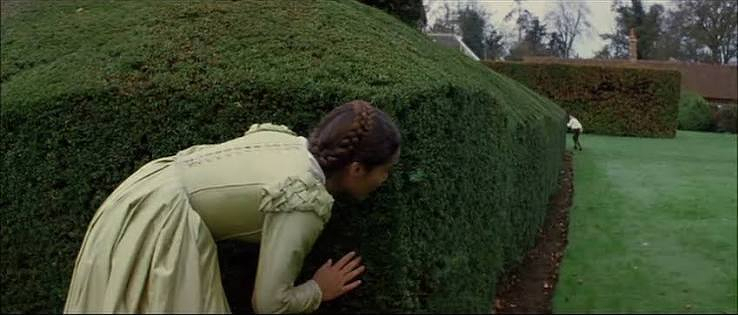
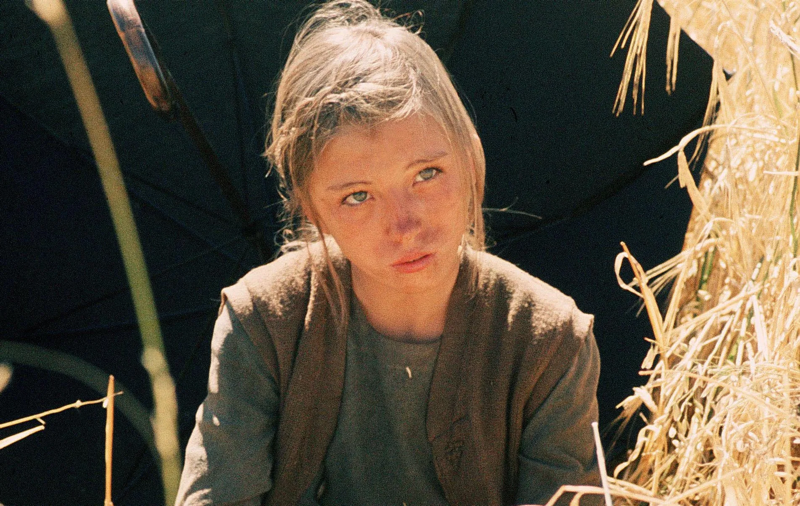
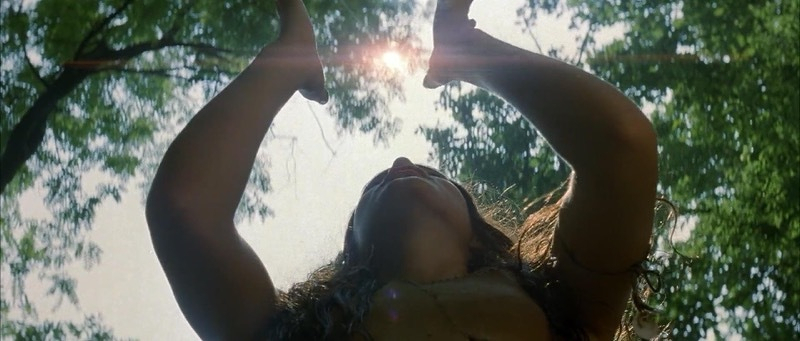
Malick did a good deal of his own camera operating in making The New World, and Q’orianka Kilcher tells a story about sitting under a tree waiting to be called for a scene and then looking up to see that Terry was filming her. Many actors tell similar stories: Malick trying to capture people living rather than acting.
I wonder if this is one reason why there are so many scenes of people swimming in Malick’s films. When you’re swimming, you’re not acting. You’re just swimming.