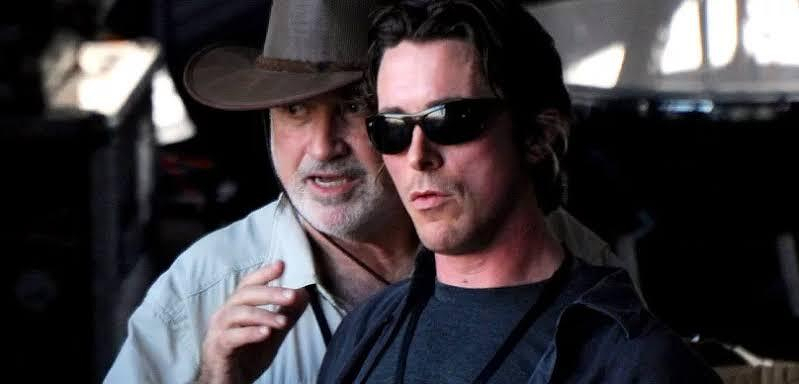
Malick’s movies are famous for their grandeur of vision and for the extensive use of voiceovers. But the thing that Malick as a maker of films is most famous for is his commitment to editing — his determination to film dozens or hundreds of hours of video and then the discover in the editing room the story’s shape – which in any given film, as I noted in my recent post on The New World, is only one of the shapes that a film might take.
Here’s Henry Butash on working as an editor with Malick:
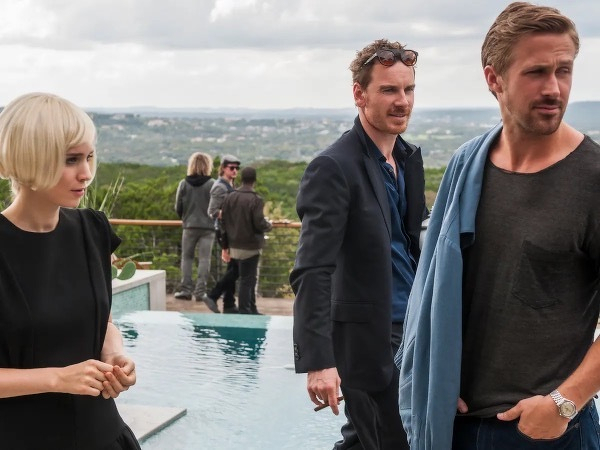
I remember on Song to Song, for example, we would explore all the different possibilities for editing a scene. The process was one of constant discovery. How could we change the perspective of a scene, and in turn change which character we identify with? What would happen if we moved a scene originally intended for the beginning down toward the end, and how did that affect the context of the other scenes around it? Sometimes these experiments didn’t work, but even those were a lesson in how to achieve certain creative effects in a film. It was wonderful practice, and it really allowed me to hone certain skills. Above all, the aim is to stay receptive to everything happening in front of you. I don’t think this is a revolutionary idea, and I’m sure countless filmmakers past and present would say the same thing, but it was nonetheless an eye-opening revelation to me as a 20-year-old, and it continues to be something I carry with me. Ultimately, I think, the goal is some sort of spontaneity – anything to bring the movie to life and create something that is organic and breathing.
I can therefore imagine Malick at some point producing a radically different version of an already-released movie. It seems to me that the most likely candidate for such revision would be, indeed, Song to Song, which, with its several main characters, could be radically reassembled. Also, we know that Christian Bale played a major role in the filming process and yet was cut out out of the final product altogether; there could be a completely different movie featuring his character, perhaps with a different title. In Kieślowski’s Dekalog characters from one episode will show up in others as minor characters: it’s true that in life people come in and out of one another’s stories, to the extent that there’s something rather quaint about saying: This person is the protagonist.
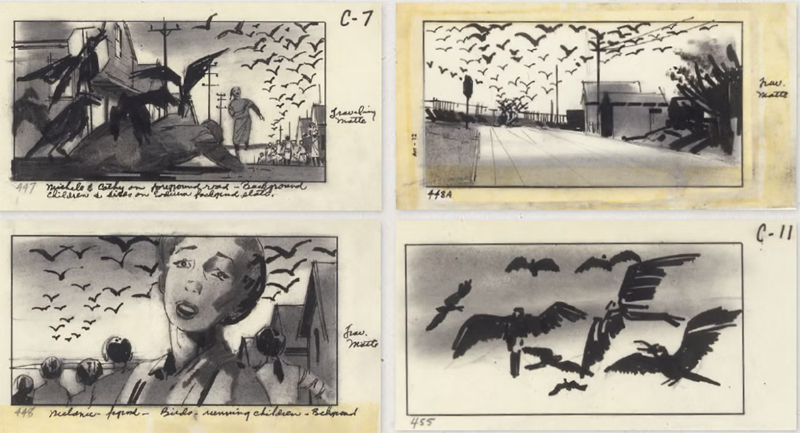
In any event, the refusal to impose in advance a particular vision is, I think, utterly characteristic of Malick. There’s a humility to it, a sense that any particular initial vision a director might have is unlikely to be worthy of what actually happens when he meets with with actors and crew in a particular place at a particular time. It’s exactly the opposite of Hitchcock’s method: Hitch storyboarded every single shot and who found the actual making of the movie dreary and mechanical, because he had already made it in his head.
I think about these matters often as I’m writing this blog; indeed, those thoughts have led me to write a blog rather than a book. I could have written a book on Malick, and I certainly could have placed it somewhere, probably a university press. But that would have required me to plan out the book and then fit my insights into the prefabricated structure.
To be sure, it would be possible to write an entire book and then say, “That’s no good, that’s not what I want to say, let me start over.” But whatever particular character or personality traits you must possess in order to do something like that — patience maybe, boldness, self-knowledge, whatever — I don’t think I have them.
So I have decided instead to turn my thoughts about Terrence Malick’s films into a blog, because a blog is an iterative medium. You can post a reflection, and then, later on, post something that revisits and perhaps revises your first idea. And gradually, over time, you assemble a Cosmos, right? That’s why I’m calling it Cosmos Malick.
Perhaps at some point down the line it will become clear to me how this blog could be shaped into a book. And should that happen, then I will take the blog posts, reassemble them, reorder them, provide connective tissue and necessary additions, and submit the result to a publisher. But at the moment that doesn’t seem likely to me; I like building a Cosmos, one astronomical body at a time. And as Butash says, “the aim is to stay receptive to everything happening in front of you.”
