Cosmos Malick Cosmos Malick
about Cosmos Malick Bibliography
Archive
  • Doubling

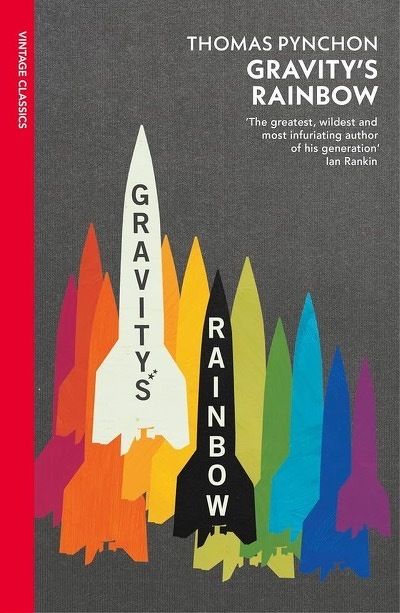
    Terrence Malick and Thomas Pynchon are two of the greatest living American artists. Both are in their eighties, though Pynchon is six years older. 

    Pynchon’s mother was Catholic, his father Episcopalian; the same is true of Malick. 

    Each graduated from an Ivy League university, Cornell for Pynchon and Harvard for Malick. 

    Each worked in various capacities for several years before settling on his life’s calling: in Pynchon’s case, writing novels; in Malick’s, making movies. 

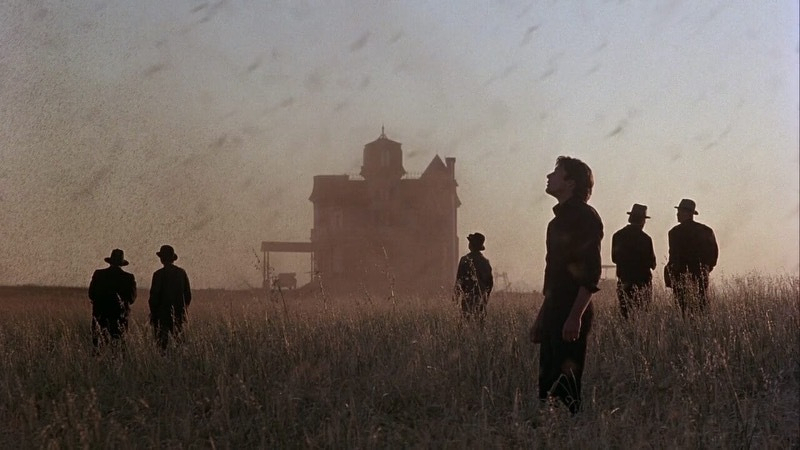
    Pynchon published three novels, highly acclaimed by some but denounced as too difficult by others, the third of them set during the Second World War, and then disappeared from public sight for seventeen years. Malick made two movies, highly acclaimed by some but denounced as too difficult by others, and then disappeared from public sight for twenty years — before reappearing with a movie about the Second World War. 

    7at8dAs0I2wnVsvIf4COS4WsBTYqyW large.

    81bYiphFT8L. AC UF1000,1000 QL80 .Pynchon’s war novel focused on the European theater; Malick’s war movie is set on Guadalcanal. 

    Later, Pynchon wrote an epic novel (Mason & Dixon) set in the eighteenth century; it was published when he was 60. Malick made an epic film (The New World) set in the seventeenth; it appeared when he was 62. 

    Pynchon has published eight novels and a collection of short stories; Malick has made nine feature films and one feature-length documentary. 

    Most of the work of each artist is set in the relatively recent past, but each has set works in something quite close to the contemporary moment — The Crying of Lot 49 and Bleeding Edge by Pynchon; To the Wonder, Knight of Cups, and Song to Song by Malick — and has also produced work that blends the contemporary and the recent past: Pynchon’s V. and Malick’s The Tree of Life. 

    Most of the work of each artist is focused on America and Americans, and considers — with genuine profundity in each case — the American quest for transcendent reality, what Pynchon calls the perception of “the far invisible.”  

    Pynchon explores this quest in a consistently comic way, Malick in a consistently earnest way. 

    Twelve years separated Pynchon’s Bleeding Edge (2013), which appeared when he was 76, and Shadow Ticket (2025); seven years have passed since Malick’s A Hidden Life (2019), which appeared when he was 76. 

    Neither man has given a proper interview in many decades, though Pynchon’s secrecy is considerably more comprehensive than Malick’s. Each clearly disdains publicity, and would prefer to face the world with his work, not his person. Neither will explain. 

    • 

    For more information on the novelist, see the pynchon tag at The Homebound Symphony. 

    → 9:06 AM, Jul 17
  • Autocinema

    The working method I described in my previous post is relevant to another question commonly asked about some of Malick’s films: To what extent are they autobiographical?

    There’s no question that there are close correspondences between The Tree of Life and Malick’s childhood in Waco, between To the Wonder and his experience in marriage, between Knight of Cups and his time spent as a screenwriter and script doctor in Hollywood. But even if those films began with straightforwardly autobiographical scripts — which I doubt — they would have undergone massive change on set, as Malick discovered what resonated and what did not resonate, what particular actors brought to their scenes, etc. Christian Bale once commented that Malick’s mantra on set was “Let’s start before we’re ready,” because in that way the cast and crew and director might find something powerful that they weren’t planning and weren’t expecting.

    Teresa Palmer, who in Knight of Cups plays a stripper named Karen, was originally asked to be on set for a single day. But, as she later reported, things changed:

    Every night I kept getting another phone call thinking it was my last day on set and just being happy with that one day, and then getting a phone call that one night saying Terry wants you to come back in tomorrow. You okay with that? I was like, yes! Yes I’m okay, that is so exciting. And then the next night, the same thing, the same thing, and I think I ended up shooting about eleven days and they took me to Vegas. I remember Christian [Bale] laughing, he was like, you’ll probably end up being the main character in this movie.

    And that’s just one example of how completely the filming can diverge from the script. Imagine then, the transformations that can take place in the process of editing. The Criterion edition of The New World contains an interview with the films’s editors, and they talk extensively about how Malick encouraged them to experiment, to get beyond their usual practices. One of them said that his typical experience in editing was to be constrained by the director, but when working with Malick he often wanted to say, Whoa, Terry, let’s pull it back a little.

    With such an improvisatory, open-ended approach, even the most strictly autobiographical script might turn into something very different by the time the story is filmed and edited. It’s safe, I think, to say that the three films I have mentioned have deep roots in Malick’s own experience, but it would be unwise to see any of those films as documenting his life. 

    • 

    In other news, things will be quiet around here for a while. I have a great many other responsibilities facing me in the coming weeks — and in any case I need to spend some time thinking about how to proceed here. There’s no question that this will be my major project for the next couple of years; but that’s all the more reason to spend some time thinking through how to pursue it in the most appropriate way. I am hoping that the enforced time away, working on other things, will itself be clarifying — that often happens for me — but it may be that when I’m again able to think about this project I’ll need some time to consider. So those few of you who care: please be patient. 

    → 6:05 AM, Jun 15
  • The Story So Far

    3fd1df78 92cc 4b94 bdc4 6dae10908778_1280x544.

    The greater World is called Cosmus from the beauty thereof.

    — J. Bulwer, Anthropometamorphosis (1650)

    Were it not for the indwelling reason the world would be a chaos and not a cosmos. 

    — J. S. Blackie, On Self-culture (1874)

    Sensations which do not amount to perceptions, make no lodgment in the cosmos of our experience, add nothing to our knowledge.

    — T. H. Green, Prolegomena to Ethics (1882)


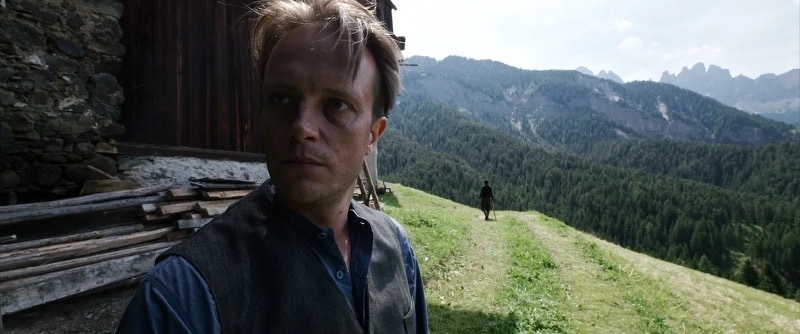
    By calling this site Cosmos Malick, I mean to suggest that Terrence Malick’s films visualize, articulate, and participate in a … well, a cosmos: a coherent, non-chaotic world, a world both intelligible and sensible. But in trying to give you a picture of this cosmos, I am hampered by having words as my primary instrument.

    To be sure, Malick is a skilled and imaginative wielder of words himself: he writes the screenplays for all his films. But his process, while it begins in ordinary ways, soon becomes extraordinary.

    It is standard practice in American filmmaking for a writer to register his or her script with the Writer’s Guild, and to do this before production begins. This practice was established when writers were regularly being denied credit for their work by the big Hollywood studios; to have their scripts registered prevented such poaching and gave them strong evidence if they needed to take rapacious moguls to court. Malick begins the making of a film by writing a script and registering it, and those registered scripts tend to find their way onto the internet. Do a couple of searches and you’ll see what I mean.

    But here’s the thing: Malick’s finished films are always, and I mean always, radically different from the registered scripts. I happen to own a copy of a complete screenplay that Malick wrote many years ago for a film he never made, and while I do intend to write about it at some point because of its intrinsic interest, there is no reason to believe that, if Malick had ever made the film, anything more than a fraction of the existing words would have been used.

    And not only are the words of a released Malick film different from the words of the registered script, they are also fewer in number. A script for Malick functions more like a treatment that an actual script, though of great size: it’s an enormous outline, or set of general directions, subject to major revision and reworking during filming. Starting no later than The Thin Red Line, Malick would show up on the set on a given morning of shooting with multiple pages of new dialogue, new ideas, meditations on character, to hand to the actors in the scenes to be filmed that day: he would have typed these out either after shooting the previous day or (more commonly, I believe) first thing in the morning. And often the purpose would be to replace the words that had previously been written with gestures, facial expressions, or simply other and fewer words. 

    (Brooke Adams on filming Days of Heaven, Malick’s second movie: “The script — when I finally actually got to read it — read like a Thomas Hardy novel. It was absolutely gorgeous. And when we started rehearsing it, we were rehearsing it in the hotel in Alberta, Canada — for a week, maybe, we rehearsed, which is already more than you usually get to do in a film. Every time we’d say lines, Terry would say, ‘Oh God, no, I don’t believe that. Cut it.’ And so he just kept cutting our lines.”) 

    One point rarely noted about Malick’s famous voiceovers is how spare they are, how few words the actors say. (The chief exceptions that come to mind are Linda Manz’s fabulously baroque apocalyptic vision at the end of Days of Heaven and the interior monologues of Father Quintana in To the Wonder.) Consider the topic of my previous post: the voiceovers — spoken by Sir John Gielgud, Brian Dennehy, and Christian Bale — in the opening minutes of Knight of Cups. Just a few dozen words, but accompanied by an extraordinarily wide-ranging series of still and moving images, undergirded by a powerful soundtrack. The words are beautiful and well-chosen, but they carry only a small part of the emotional and affective weight of the scenes in which they appear.

    My point is that when I am trying to describe Cosmos Malick I am working with limited and inadequate resources. I will be trying as this site grows to get better at this task, but I will, I think, always be tempted to say: Just go watch the movies, for heaven’s sake! But if you look back at what I have written so far, what is the Cosmos that I have described? What does the story so far add up to?

    I’d summarize it by making two points.

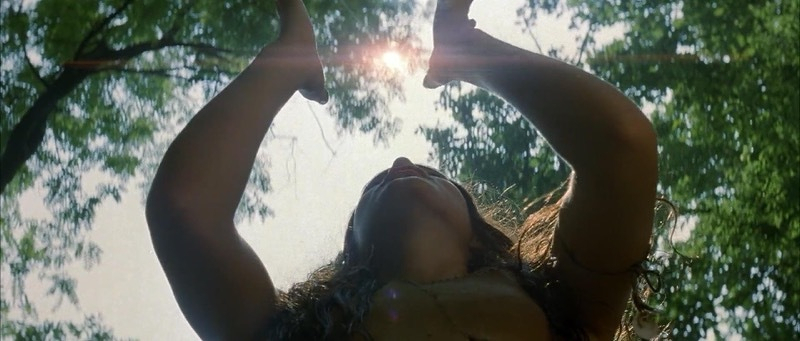
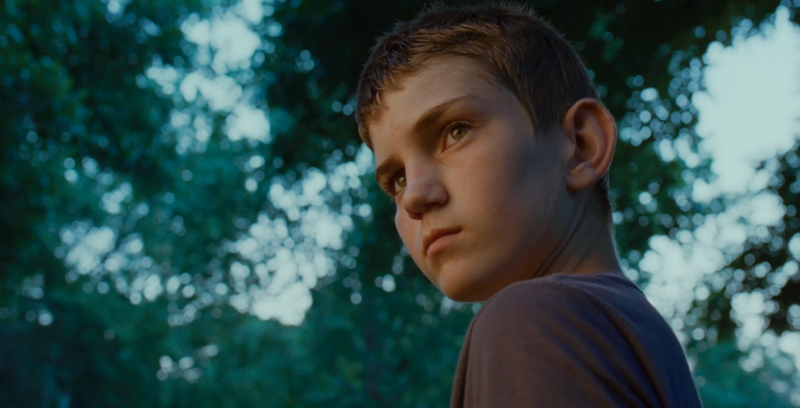
    First, as Malick’s career has developed, he has moved towards wider and wider lenses: at this point he’s actually gotten down below 10mm. The primary effect this enables is to have (sometimes extreme) close-ups on faces that also show us the world within which those faces are placed. 

    E8f28c41 f9f6 4fa0 8aff 6aef1a5b31b3_1920x1080.

    6768e833 817c 4fb6 8cf8 a2e50f2437ab_1920x802.

    New world malick holiding sun.

    Tree of life2.

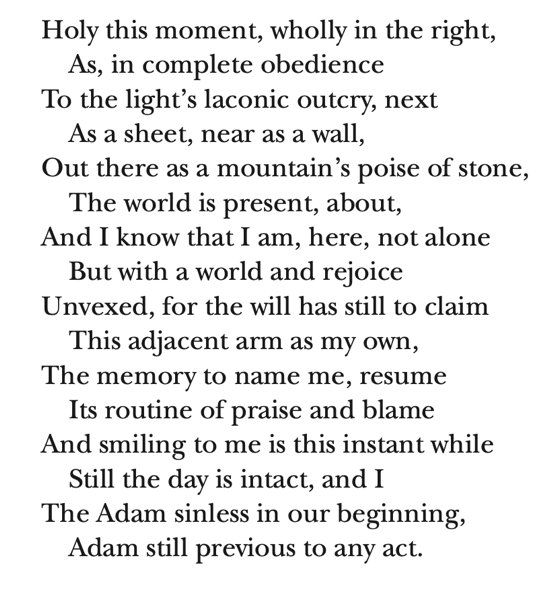
    Here I think of a beautiful passage from Auden’s “Prime” on waking up: 

    “Not alone / But with a world.” But as Private Train reminds us, in this world there seems to be “a war in the heart of nature.” If this world is not causeless but created, if it is Cosmos rather than Chaos, then what does this constant struggle tell us about the Creator? Whatever it tells us, it cannot be wholly comforting. Here I find myself thinking about the one work of art that I believe to be most similar in temper and vision to Malick’s movies, and that is G. K. Chesterton’s The Man Who Was Thursday. I think especially of this passage:

    “Listen to me,” cried Syme with extraordinary emphasis. “Shall I tell you the secret of the whole world? It is that we have only known the back of the world. We see everything from behind, and it looks brutal. That is not a tree, but the back of a tree. That is not a cloud, but the back of a cloud. Cannot you see that everything is stooping and hiding a face? If we could only get round in front — ”

    So I would say that Cosmos Malick starts with these fundamental, governing apprehensions: that we are not alone, that we wake into a world — but that world offers ambiguous testimony to its own character. There is a war at the heart of nature; but if we look and listen with sufficient attention, we may discern also the way of grace. We may, we just may, be able, eventually, to “get round in front” and see the face of the world.

    → 5:01 AM, Jun 10
  • Three-Part Invention

    Returning to the theme of Malick as a contrapuntal filmmaker: We could say that To the Wonder, with its Neil/Marina/Jane theme and its Father Quintana theme, is a two-part invention, while Knight of Cups is a three-part invention. But the latter film — it was made right after Wonder — is contrapuntal in a different way. Here we are not dealing with two sets of characters in two different settings, but rather something more complex: three symbolic representations of a person’s life. 

    The notion that the essential shape of one’s life, the fundamental pattern that underlies one’s apparently chaotic experiences, might be discerned not by the logic of the left brain but by the various visionary experiences (dream, vision, symbol, image, music) of the right brain is perhaps the single most pervasive element of Cosmos Malick. William Blake once wrote to a friend, 

    What it will be Questioned When the Sun rises do you not see a round Disk of fire somewhat like a Guinea O no no I see an Innumerable company of the Heavenly host crying Holy Holy Holy is the Lord God Almighty. 

    That Blake might have been seeing what is really there is the possibility that, in his own distinctive way, Malick raises repeatedly in his films. Blake may be the one great artist most similar in spirit to Malick. Blake or Arvo Pärt. I think our current moment is one almost incapable of understanding Blake — I wrote about that here — and Malick is subject to similar failures of comprehension. Many future posts will explore these issues. 

    But this post will focus on Knight of Cups — and indeed, on just the words of the open sequence of the film. (Here I will say almost nothing about images or music.) 

    The three symbolic accounts are presented to us at the outset: 

    • Tarot (in the title) 
    • The Hymn of the Pearl (in a voice-over) 
    • The Pilgrim’s Progress (in another voice-over) 

    We are therefore given to understand before we are even introduced to our protagonist that we have three ways of representing or interpreting his experience. But what we cannot know is whether the three symbolic systems, as it were, are complementary — or whether, conversely, we must chose one as the primary, governing representation. 

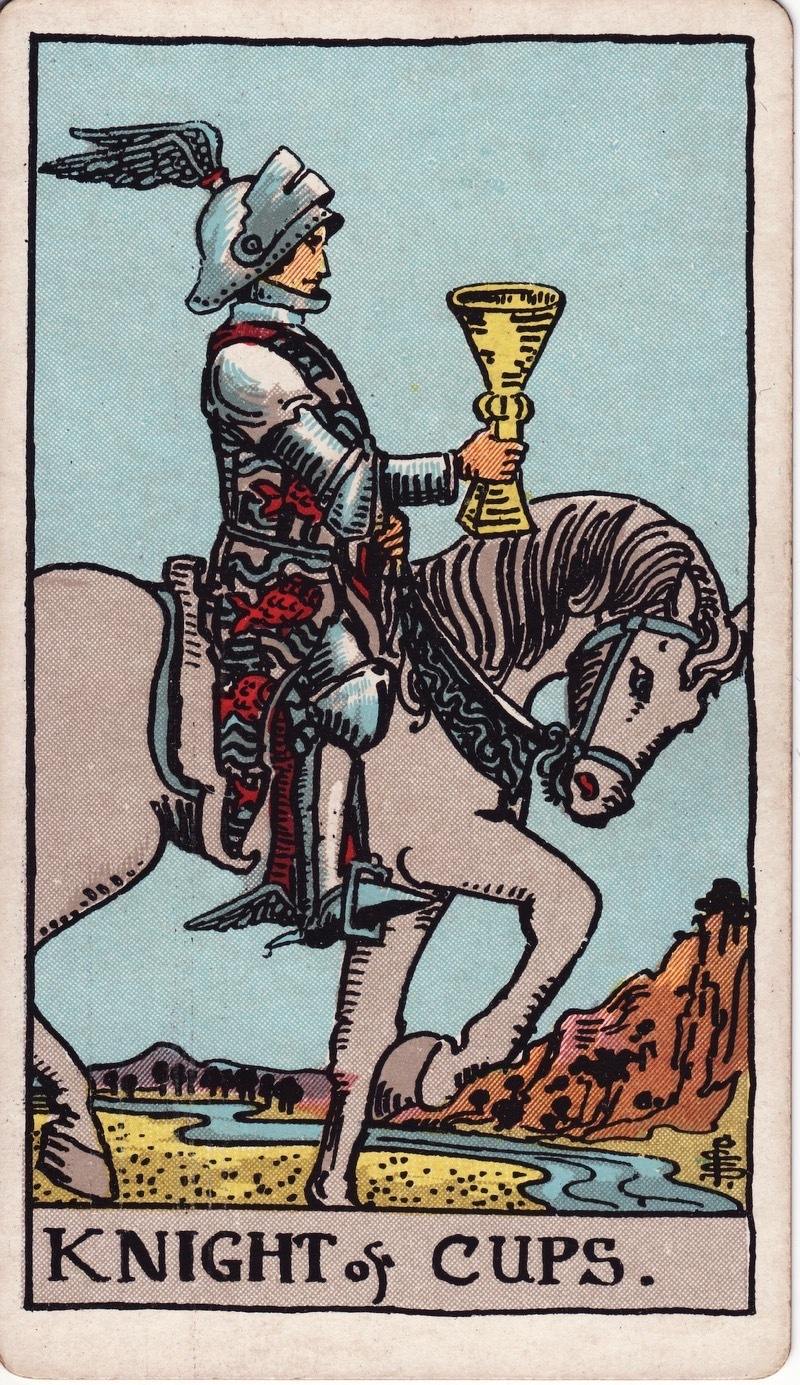
    If our attention is directed at first towards Tarot, then we should take a good look at the Knight of Cups in that deck: 

    Note that the Knight is not rushing: his horse is walking, which enables the Knight to hold in firm balance his cup, keeping its contents — whatever they may be — safe. Commentators on the Tarot often note that the Knight of Cups is the least dynamic of the Knights, and yet he alone wears wings on his helmet and his shoes. This marks him as a Hermes figure, a messenger, and in Tarot tradition one who mediates between the unconscious and the conscious. It is noteworthy, then, that Rick, the protagonist of the film, is a screenwriter: a storyteller, which is to say, an interpreter of events and persons. So the first thing that the connection with Tarot does is to situate Rick vocationally. 

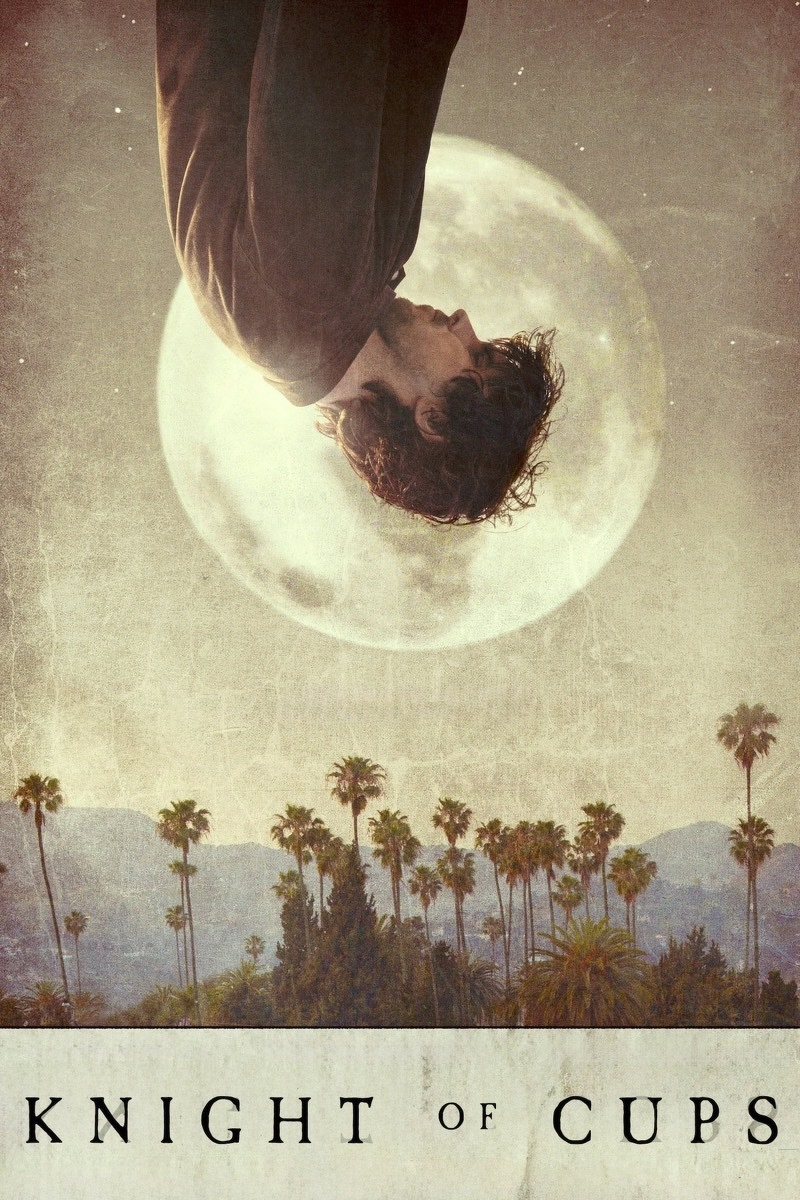
    It is important that Tarot cards, unlike the cards in a standard deck, are not reversible: they have a distinct rightside-up and upside-down. Readers of Tarot cards are divided on whether it matters that a card is laid down “reversed” (upside-down) but as far as I can tell most interpreters believe that a reversed card disrupts the reading: it suggests that there is some kind of blockage or impediment in the life of the person whose story is being interpreted — and often that that impediment is internal, caused by some mental or spiritual maladjustment rather than by circumstances. Therefore we should take particular note that the film’s poster shows Rick upside-down. He is not just the Knight of Cups, but the Knight of Cups reversed. 

    But hang on a minute … should our attention go first to Tarot? Other things are going on early in the movie. We see that the movie is called Knight of Cups, but that Tarot is going to be an organizing principle in the film is not clear until other cards start showing up, for instance: 

    Knight of Cups Tarot 2

    At the outset two other symbolic structures are present. For one thing, we see scenes of childhood (filmed on grainy stock that looks like a home movie) accompanied by a narration from a person whom we later learn is Rick’s father, who recalls — and I punctuate and lineate to follow the rhythm of the narration — 

    the story I used to tell you when you were a boy
    about a young prince, a knight,
    sent by his father,
    the king of the East,
    West to Egypt
    to find a pearl,
    a pearl from the depths of the sea.
    But when the prince arrived
    the people poured him a cup that took away his memory.
    He forgot he was the son of the king.
    Forgot about the pearl.
    And fell into a deep sleep.
    The king didn’t forget his son.
    He continued to send word.
    Messengers.
    Guides.
    But the prince slept on. 

    And as we hear these words, we see Rick at a party: “the depths of the sea” become a swimming pool, the cup of forgetfulness a series of cocktails. (Note that here is is not the bringer of a cup but the receiver, not the bringer of a message but the unwitting object of one.) Rick drives, dances, plays, kisses … but he is sound asleep. 

    Thus “The Hymn of the Pearl.” But something happens even before this. The first words we hear, words that begin even before the title, even before the film’s first image, are these: 

    CleanShot 2026-05-21 at 10.59.22@2x.

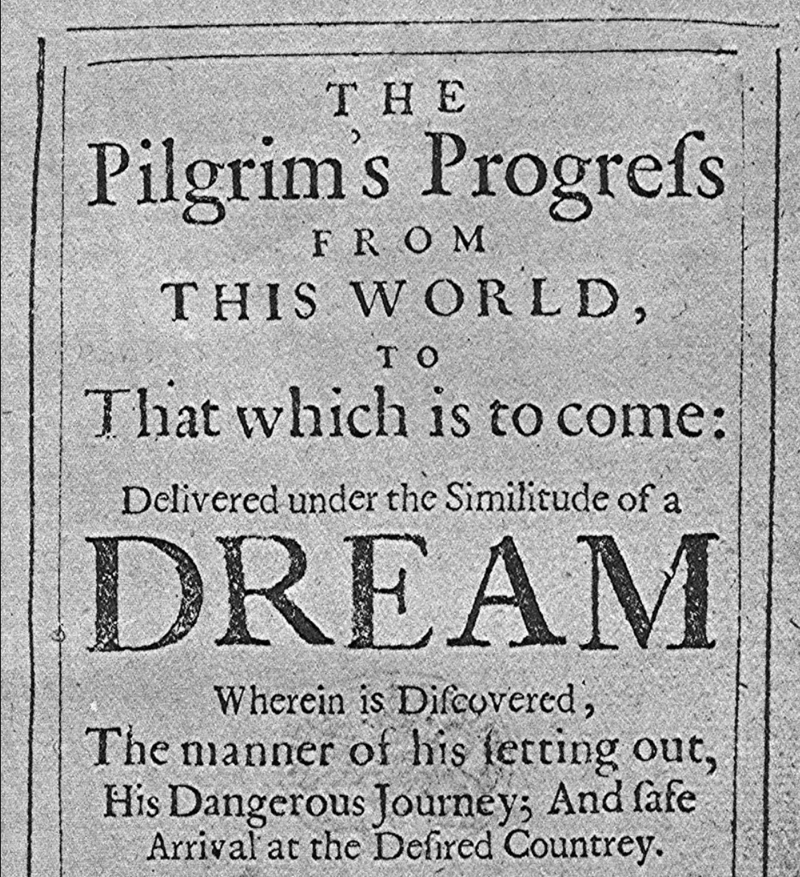
    These words are followed by the opening words of Bunyan’s book: 

    As I walked through the wilderness of this world, I lighted on a certain place where was a Den, and I laid me down in that place to sleep: and, as I slept, I dreamed a dream. I dreamed, and behold, I saw a man clothed with rags, standing in a certain place, with his face from his own house, a book in his hand, and a great burden upon his back. 

    The narrating of these words by Sir John Gielgud allows us to discern that we are hearing the beginning of Ralph Vaughan Williams’s The Pilgrim’s Progress: A Bunyan Sequence. (Vaughan Williams spent many years trying to put this work together: see details here.) 

    So our attention is not directed first to Tarot, nor the “Hymn of the Pearl,” but rather to Bunyan. And if we notice that, we might also notice that though we are carried through most of Rick’s story by a series of title cards taken from the Tarot, the final title card does not come from the Tarot: 

    Knight of Cups Tarot 9

    Let the reader take careful note: Tarot is neither the opening nor the concluding symbolic structure. As I said, the Tarot decks situates Rick vocationally, and in his passage through the public world; but I would argue that the Hymn of the Pearl helps to situate him familially, as a son and brother; and Pilgrim’s Progress places him spiritually, as a man bearing a great burden who must leave the City of Destruction in order to rid himself of that burden. 

    So let’s conclude this exercise — there will obviously be much to say about this movie in later posts, perhaps, who knows, over a period of several years — by simply noting the words of the opening sequence, in order: 

    1. Gielgud’s recitation of the title page and opening sentences of The Pilgrim’s Progress. 
    2. The title of the movie.  
    3. Rick in a muted, near-whispering voiceover: “All those years … living the life of someone … I didn't even know.” 
    4. His father remembering how he told young Rick the story of “The Hymn of the Pearl.” 

    We are now ready to begin. 

    → 5:22 AM, Jun 1
  • Frame and Cut

    The red thin line.

    In Whose Justice? Which Rationality? (1988) and Three Rival Versions of Moral Enquiry (1990), Alasdair MacIntyre mounts a critique of the related but distinct traditions of moral philosophy he calls relativism and perspectivism. They play a key role in the philosophical history he narrates, because they are the opponents which moral objectivism seeks to overcome. The moral objectivist insists that when people say “Well, it’s all relative, isn’t it” or “It just depends on your perspective” they’re giving up on getting moral questions right, which they should not do. But MacIntyre thinks the moral objectivist can’t actually demonstrate the correctness of any particular moral view, and so leaves the relativism and/or perspectivism regnant. MacIntyre proposes a wholly different way of adjudicating moral disputes, one based on “the rationality of traditions.”

    I find MacIntyre’s position compelling, but even if you don’t, you have to acknowledge, I think, his demonstration of the power of relativism and perspectivism, not just as philosophical positions but as experiential givens. We all know — in multiple ways, literal and metaphorical, physical and metaphysical — how powerful point-of-view is and how intractable can be the differences between those with different points of view.

    I think it’s fair to say that Terrence Malick finds the problem of perspective endlessly fascinating and challenging, and most of his experiments in cinematic storytelling are meant to address this problem. For introductory purposes, we can subdivide his strategies into two categories: Frame and Cut.

    How to frame a shot? In the strict sense this means what area is contained within the image, but I’m going to use it in a slightly larger sense. So while I want to note that Malick often prefers wide angles that take in a lot of territory, he also wants that frame to have great depth of field. As his greatest cinematic collaborator, Emmanuel Lubezki (“Chivo”), has said,

    Terry doesn’t tell the audience where to look in the frame — if they want to look at the actors, they can, or if they prefer they can look behind them at the trees. We want complete depth and clarity in order for that to happen, so another rule is to shoot with film that is as grainless as possible — in general, Terry prefers images that are sharper rather than softer.

    Framing necessarily imposes a perspective, but Malick wants to limit the imposition, to allow his viewers to explore as much as possible within the constraints of the image. 

    The tree of life2 1200x600.

    And from The Tree of Life on, Malick has contrasted beautifully composed widescreen images with handheld shots that place us “in the eye of the hurricane,” constantly swooping and diving: again, a way of expanding perspective.

    But Malick is concerned with perspective in a more metaphorical sense also. Consider The Thin Red Line. The novel by James Jones on which the film is based concerns not one or two soldiers, but rather C-for-Charlie Company: dozens of soldiers, many of which receive at least some focalization. Malick went into filming with a screenplay that followed Jones in showing the story from many perspectives, but with a few characters foregrounded, the most important of them being Corporal Geoffrey Fife (to be played by Adrien Brody). But as he filmed, his sense of narrative perspective altered, and Jim Caviezel’s Private Witt came to be the closest thing that the movie has to a central character. Not quite the protagonist — C-for-Charlie Company is the real protagonist — but close.

    One might think of all this in terms of distribution of weight: our overall understanding of C-for-Charlie Company’s experience in the war is formed by the amount and kind of attention given to the various characters. A story in which Witt’s perspective predominates will feel different than one in which Fife’s does — or Sergeant Welsh’s, or Private Train’s.

    I said that Malick’s sense of how his story should be weighted changed during filming, but a director’s final distributions of attention are determined during the editing process. Thus we have moved from Frame to Cut. Editing or “cutting” is done along three axes:

    • What images do we see?
    • How long do we see each of them?
    • In what order do we see them?

    Malick is famous for (a) shooting an enormous amount of footage and (b) taking a very long time to edit that footage into a feature-length film. Some of the challenges of getting it all done may be seen in this half-hour video about editing The Thin Red Line.

    Or consider The Tree of Life. When Malick was working on an extended edition of the film for the Criterion release, Lee Kline of Criterion said that “the amount of footage that was shot for the movie was insane.”

    There were pallets and pallets and pallets of footage in a warehouse in Valencia, Calif. where all the footage was put after the movie wrapped. Some of it was put away well, some of it wasn’t, so sometimes it took multiple tries to find the footage. It was in a box, it was on a reel, a shot that was at the end of a reel. It was like looking for a needle in a haystack, and it took months.

    When Malick, working with Kline and others at Criterion, eventually put together a version fifty minutes longer than the theatrical release, everyone agreed that it was effectively a new movie. 

    Frame the images and cut them, and you have a story. Choose images differently framed and then cut them differently, and you have a different story. In Malick’s cinema, this is not relativism but rather an acknowledgement that human life is necessarily more complex and multilayered than any representation of it. 

    I think this is relevant in a distinctive way to the three films — The Tree of Life, To the Wonder, and Knight of Cups — that have been seen as autobiographical. It cannot be doubted that each film draws heavily on Malick’s own experience, in the contexts of (in order) family, erotic love, and vocation. But in each case we have a way of exploring Malick’s experience, not the way. If he were to make extended editions of To the Wonder and Knight of Cups, they would differ in interesting ways from the theatrical releases: they would offer different perspectives, in all the senses of that word. 

    In his great essay “From the Prehistory of Novelistic Discourse,” Mikhail Bakhtin says that parodies of serious works of art arise because that provides "the corrective of reality that is always richer, more fundamental and most importantly too contradictory and heteroglot to be fitted into a high and straightforward genre.” But parody is only one way of providing that corrective. When the director changes the framing, and the editors cut and re-cut along all three axes, new narratives emerge, and we are reminded that no one story can be the definitive account of what a person does and is. To acknowledge this is not to succumb to relativism, but to have the humility to understand that life is always more complex than our representations of it. 

    So framing and (especially) cutting are acts that have enormous implications: to say that through them you are “telling a story” is inadequate. You are finding a story, which means: achieving an understanding, an understanding of a life, or a set of lives, that can never be more than provisional — but typically (Criterion editions and director’s cuts are not universally available) you can only make one such understanding available to the public. I suspect that the responsibility accompanying the necessary decisions weighs heavily on Malick. 

    → 5:42 AM, May 22
  • Counterpoint

    I often think of one of Auden’s great early poems, titled in later collections “A Summer Night” but originally called by its first line: “Out on the lawn I lie in bed.” It is based on a real experience, one that I wrote about in some detail here. Auden is enjoying the company of colleagues and musing on, among other things, the great question of why he should be so blessed.

    At one point he imagines the moon rising and then looking down upon him and indeed upon the whole world: 

    To gravity attentive, she
    Can notice nothing here, though we
    Whom hunger cannot move,
    From gardens where we feel secure
    Look up and with a sigh endure
    The tyrannies of love:

    And, gentle, do not care to know,
    Where Poland draws her eastern bow,
    What violence is done,
    Nor ask what doubtful act allows
    Our freedom in this English house,
    Our picnics in the sun. 

    Why should we be among the fortunate “Whom hunger cannot move?” When others are facing the fiercest tyrannies, why should we be allowed merely to “endure / The tyrannies of love”? 

    Auden here introduces a counterpoint to his own experience of peaceful blessedness, what he would later call his “vision of agape.” The two themes are juxtaposed to each other, neither victorious, neither dispensable. The blessed and the afflicted. 

    To the Wonder Malick 1.

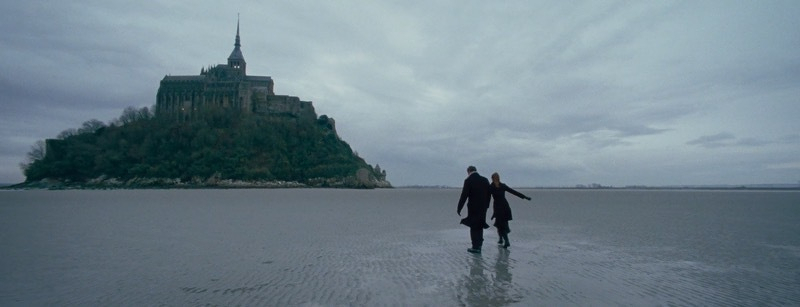
    As “Out on the lawn” is a contrapuntal poem, Malick’s To the Wonder (2012) is a contrapuntal film. Neil, Marina, and Jane endure the tyrannies of love — and they are tyrannies, the suffering of all these people is real and affecting. But through the scenes involving Javier Bardem’s Father Quintana we are introduced to a very different world: a world of poverty, illness, sin, guilt, grief — affliction of the most tangible kinds. 

    Father Quintana’s daily life of service and intercession serves as a powerful counterpoint to the first theme, which is (as the critics said when the film came out) a “romantic drama.” But in a way a romantic drama is what it is not, because the narrative is so obscured and fractured. It’s better to think of the entire movie not as a narrative at all, but rather a contrapuntal musical composition, in which each major theme has a series of motifs that are stated, developed, and recapitulated, almost in classic sonata form — but, again, with counterpoint. It’s the simultaneous presence of these two musical forms (sonata and counterpoint) that makes To the Wonder Malick’s most difficult film to watch. It was not written so much as composed; it is musical to its very bones. And that’s not how movies are usually structured. 

    (Hanan Townshend, who composed music for the film, has said that Malick has very strong psychological and emotional associations with certain musical changes: "I knew of his wonderful obsession with the tension and release of intervals, particularly the tritone resolving to the fifth as well as singular chords alternating from major to minor.” It’s difficult to overstress how musical Malick’s whole experience of the world is.) 

    The American scenes in To the Wonder were filmed mainly in Bartlesville, Oklahoma — where Malick lived for a time and where his parents lived for several decades — but the ones featuring Father Quintana’s work among the insulted and the injured were shot not by Malick himself but rather by the eminent photojournalist Eugene Richards. Malick was so committed to counterpoint that he allowed other people to shoot some of the movie’s key scenes. 

    Richards shot a great deal of footage that did not end up in the final cut of To the Wonder, and in 2018 he released “Thy Kingdom Come,” a 43-minute film taken from that footage. In an interview with the New Yorker, Richards explained that all the people he filmed were told that Bardem was not actually a priest, but rather was playing one in a movie. “Most people knew him as the murderer in ‘No Country for Old Men.’ A couple people knew him as Penelope Cruz’s husband. Some didn’t know who he was at all. And absolutely no one cared, in the end, who he was, except that he was there to listen.” 

    The stories they have to tell him are often harrowing, and often come from some very deep and dark place within them. Bardem said, 

    Every time I got into a room with any of them, something magical happened. They would really become a human being sharing, explaining, opening themselves up to a priest. We could go hours recording without stopping because every one of them, what they needed, was to be listened to. I was shocked…. I was not an actor in there. I was there for them, and I had to be empty to be filled with their statements, with their words, with their dreams, with their nightmares. 

    The everyday clothing of a priest — the black suit, the clerical collar — are signs of two things: attention and absolution. Bardem of course could not pronounce absolution in the proper sense, but for people who are broken and forgotten attention itself is a kind of absolution, a way of saying “You are not beyond the reach of human sympathy; you are part of the human family.” 

    And who doesn’t need to hear that? It’s noteworthy that the two great musical themes of the movie converge when Neil seeks the counsel of Father Quintana. He endures only “the tyrannies of love,” but again, those are in their own way tyrannies. Father Quintana knows perfectly well that these privileged people — traveling the world, walking through airports, moving in and out of their lovely houses, packing and unpacking, never really settled — don’t experience the gross pains that he sees every day. But he listens to them anyway; it is not his job to compare or to judge. So he prays, for himself as much as for all the others to whom he listens: 

    Where are you leading me? Teach us where to seek you. Christ, be with me. Christ before me. Christ behind me. Christ in me. Christ above me. Christ on my right. Christ on my left. Christ in the heart. Flood our souls with your spirit and life so completely that our lives may only be a reflection of yours. Shine through us. Show us how to seek you. We were made to seek you.

    → 9:10 AM, May 11
  • Private Train's Life Verse

    MV5BNmYyYzM4ZDItZTJiNC00Mzc2LWFhYmItOTk2ZmJiNmZhN2NmXkEyXkFqcGc@. V1 .

    Terrence Malick is a biblically literate man — to say the very least — but Holy Scripture in his films often is mediated through theological and spiritual sources. I’ll be writing about some of those in later posts, but here are a few examples:

    • The apocalyptic visions in Linda Manz’s voiceover at the end of Days of Heaven
    • The contrast between Nature and Grace at the beginning of The Tree of Life
    • The prayers of Javier Bardem’s priest in To the Wonder
    • John Gielgud’s recitation of the opening sentences of The Pilgrim’s Progress at the beginning of Knight of Cups

    Sometimes the biblical text is intriguingly buried, as when, in Song to Song, a movie in which Patti Smith appears as a counselor to one of our protagonists, we hear in the background her amazing song “My Blakean Year” — which contains these lyrics:

    So throw off your stupid cloak
    Embrace all that you fear
    For joy shall conquer all despair
    In my Blakean year

    Mercy hath a human heart
    Pity a human face
    Love a human form divine
    And Peace a human dress

    I leave the discovery of the biblical roots of those lines as an exercise for my readers.

    Even in A Hidden Life the Bible is not foregrounded. You have to pay attention to the echoes in the language of the characters — something I will do in a future post.

    But there’s an interesting exception to this reticence, and it comes in The Thin Red Line. That film, like all of Malick’s, makes extensive use of voiceover, but it’s unique in the number of voices we hear. Usually Malick provides a visual link: we see a character, and then we hear his voice, according to the cinematic grammar of mental soliloquy that I believe was pioneered by Laurence Olivier in Hamlet (1948): see this scene for example.

    But on several notable occasions that visual link is not provided. For instance, the opening soliloquy —

    What’s this war in the heart of nature? Why does nature vie with itself — the land contend with the sea? Is there an avenging power in nature? Not one power, but two?

    — and this, from two hours in:

    This great evil … where’s it come from? How’d it steal into the world? What seed, what root did it grow from? Who’s doin’ this? Who’s killin’ us? Robbin’ us of life and light. Mockin’ us with the sight of what we might have known. Does our ruin benefit the earth? Does it help the grass to grow, the sun to shine? Is this darkness in You, too? Have You passed through this night?

    — and these final words of the film:  

    Where is it that we were together? Who were you that I lived with? The brother. The friend. Darkness, light. Strife and love. Are they the workings of one mind? The features of the same face? Oh, my soul. Let me be in You now. Look out through my eyes. Look out at the things You made. All things shinin’.

    — are uttered by the same voice.

    Most viewers seem to think that the voice is that of the story’s central character, Jim Caviezel’s Private Witt, but it’s not. They’re fooled by two (actually rather distinct) Southern accents. The speaker is an apparently minor character, Private Edward Train, who is played by a non-professional actor named John Dee Smith. (For the details, see this essay, originally published in the journal Post Script.) 

    Train is sufficiently minor that in the movie’s Wikipedia page he isn’t mentioned, but in an important sense he’s not minor at all: he’s at the heart of the movie.

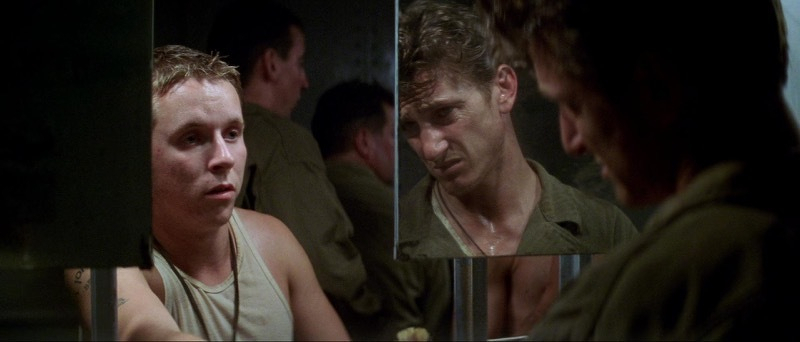
    A few minutes after that initial voiceover, we meet Train, on a troop ship headed for Guadalcanal, and he’s in a panic. He’s terrified, and he’s telling Sergeant Welsh (Sean Penn) all about it — or rather he’s telling anyone who’ll listen, and Welsh is listening. Other soldiers look and then look away. Train says that the ship is a “floating graveyard,” that they’ll all die, that when they’re dropped off the troop ship they’ll probably not even make it onto the beach.

    (This was a common fear among soldiers coming to Guadalcanal, because they expected it to be desperately defended by the Japanese, but as it turned out the Japanese withdrew into the center of the island and the landing was virtually unopposed. There was no way for anyone to anticipate that, however.)

    Train tells Welsh: “The only things that are permanent is, is dyin’ and the Lord. That’s it.” He then, in his distress, remembers the faith that he has been taught: “This war ain’t gonna be the end of me, and [looking up and pointing at Welsh] it ain’t gonna be the end of you neither.”

    At this point we might notice that Train has a tatto on his bicep, which reads, in conveniently large letters: 1 JOHN 4:4. In the King James version that a Southerner in 1943 would certainly have used: “Ye are of God, little children, and have overcome them: because greater is he that is in you, than he that is in the world.”

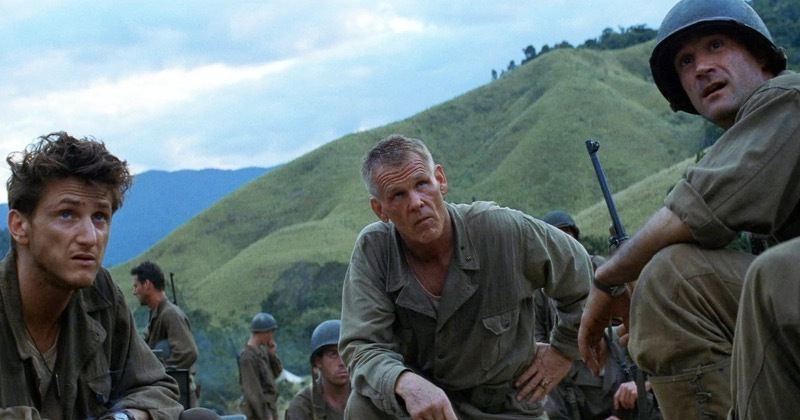
    Train here expresses the fears that they all have but know better than to say out loud. That’s why he makes them uncomfortable. It’s as though everything they have suppressed finds its outlet through him. He fulfills this function again at the end, when those who have survived are on another troop ship, taking them to safety: “Well, I figure after this the worst is gonna be gone.” (Look at the framing of that shot at the top of the page: Train as a mirror to Welsh. Notice also how the tattoo is hidden: it’s only as the conversation develops that it becomes visible.) 

    Perhaps it is true, after all, that Private Train has overcome, that “greater is he that is in you, than he that is in the world.” That first troop ship was not a floating graveyard … at least, not for him. But for others the story is different, and darker. Could those who perished have thought, in their dying moments, that they had in some vital sense overcome, thanks to the Christ who is in them and who is greater than the one who brought into the world “this great evil”? 

    One may hope. Perhaps Train also hopes, especially since he knows that he is connected in some permanent way with the “brothers” he lived and fought with — and that all of them are connected in some equally permanent way to Creation. (I wrote a bit about these connections here.) Train has gone into Hell and has passed through, he has come out the other side; and he bears witness to, indeed is a part of, those who fought, on both sides; and further he bears witness to the glory of Creation that persists despite our worst efforts: as Auden puts it, “The order we try to destroy, the rhythm / We spoil out of spite.” As Private Train puts it: All things shining. 

    At this point I recall a famous passage from The Gulag Archipelago:

    All the writers who wrote about prison but who did not themselves serve time there considered it their duty to express sympathy for prisoners and to curse prison. I… have served enough time there. I nourished my soul there, and I say without hesitation:

    “Bless you, prison, for having been in my life!”

    People, especially Christians, love to quote that passage. But they tend to leave out what comes next, even though what comes next is precisely what marks Solzhenitsyn as a great writer:

    (And from beyond the grave come replies: It is very well for you to say that — when you came out of it alive!) 
    → 5:42 AM, May 6
  • Delays Ahead

    Hello, dear readers —

    Posting will be slow here for a while. I am currently

    (a) trying to get my mother established in an assisted-living facility, which is sad for everyone concerned but also necessary;

    (b) trying to finish out the semester without any disasters;

    (c) helping my beloved bride do the necessary preparations for her surgery next week;

    (d) editing the proofs for the forthcoming paperback edition of Auden’s The Shield of Achilles — an edition that will correct a few errors from the first edition, so you should preorder now;

    (e) responding to copyedits for my biography of Dorothy L. Sayers.

    And then after Teri’s surgery I will be in caregiver mode for a while.

    Now that I write it all down I think: Damn, I am overwhelmed. But better times are coming. Please be patient with me, God is not through with this blog yet.

    → 8:10 AM, Apr 27
  • Sphinxes

    Badlands this very moment.

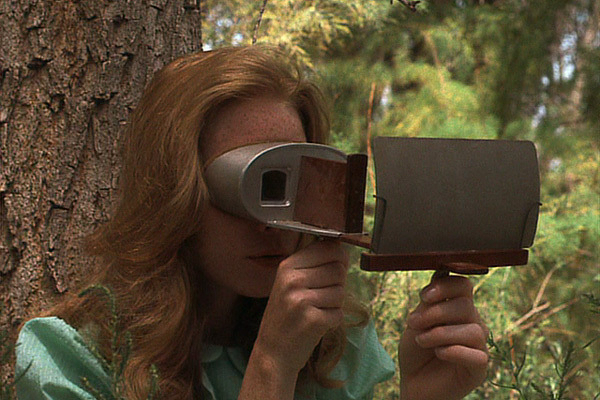
    In Malick’s first film, Badlands, a teenage girl named Holly – having run away with a charming young man named Kit who has murdered her father – finds herself hiding out with Kit in the woods. She has brought along a few souvenirs of her previous life, including a stereopticon that had belonged to her father. As the images pass before our eyes, we hear her soliloquy:

    One day, while taking a look at some vistas in Dad’s stereopticon, it hit me that I was just this little girl, born in Texas, whose father was a sign painter and who had only just so many years to live. It sent a chill down my spine, and I thought, Where would I be this very moment if Kit had never met me? Or killed anybody? This very moment? If my Mom had never met my Dad? If she’d have never died? And what’s the man I’ll marry gonna look like? What’s he doing right this minute? Is he thinking about me now, by some coincidence, even though he doesn’t know me?

    One of the images we see as we listen to Holly is a photograph of the Great Sphinx of Giza – so we call that monumental statue, though we do not know what its makers called it, and it differs in some respects from the Sphinx of Greek myth. That myth tells us that the Sphinx was a monstrous creature – with a lion’s body, a serpent’s tail, an eagle’s wings, and the face of a woman – who dwelt near the city of Thebes and posed riddles to travelers. Those who could not answer the riddles she killed and consumed. And so we are reminded that Holly, though a traveler, is her own Sphinx, posing questions to herself that she cannot answer. The past cannot be rewritten; the future cannot be known. (But it is interesting that Holly assumes both that she will one day be married and that her future husband will not be Kit.)

    This image of the Sphinx leads us down curious paths. In 1840 Ralph Waldo Emerson wrote a poem that he believed so central to his own imaginative world that he placed it at the beginning of every collection of his poems published in his lifetime. The poem is called “The Sphinx,” and it is famously inscrutable. What can we say with confidence about it?

    Not much, to be honest. But first, that it begins with the Sphinx asking, “Who’ll tell me my secret / The ages have kept?” This secret concerns “The fate of the man-child; / The meaning of man.” There is a mystery about humanity because – unlike the other creatures, who are “By one music enchanted, / One deity stirred” – humans behave in strange and contradictory ways:

    But man crouches and blushes,
    Absconds and conceals;
    He creepeth and peepeth,
    He palters and steals;
    Infirm, melancholy,
    Jealous glancing around,
    An oaf, an accomplice,
    He poisons the ground.

    That is, human beings are uniquely divided from the rest of the world – and know it. We don’t act honestly and straightforwardly; we blush, we are jealous; we’re not only lamentably distinct from the rest of nature, we are also internally divided.

    The Sphinx’s discourse is interrupted by a poet who is said to speak “cheerfully,” I think – here we cease to be able to speak confidently – I think because he simply reframes the Sphinx’s mournful description of our dividedness as a series of paradoxes which he wishes to embrace. But critics and readers are divided on these matters, and we are left with many questions. Is the poet correct in his reframing, or tragically over-optimistic? When the Sphinx tells the poet to “take thy quest through nature,” does this counsel contain a reprimand? Why is the Sphinx suddenly “merry”? (“Up rose the merry Sphinx,” Emerson writes.) These questions are perhaps as unanswerable as Holly’s, especially since Emerson forcefully denied his own ability to answer anything: “Do not set the least value on what I do, or the least discredit on what I do not, as if I pretended to settle anything as true or false. I unsettle all things. No facts are to me sacred; none are profane: I simply experiment, an endless seeker, with no Past at my back.”

    Here we might reflect that, thanks to his refusal to explain himself and his work, his refusal even to give interviews, Terrence Malick has been called a recluse, a hermit — and, more portentously, a riddling Sphinx. Pico Iyer, one of Malick’s most insightful commentators, writes: “How can one not be fascinated with the great sand-blown Sphinx of modern filmmaking, Terrence Malick?” This endless seeker. 

    (But is he really so inscrutable?)

    Throughout Emerson's poem, the Sphinx speaks of “Man” as a single being with a single character. When she says to the Poet, “I am thy spirit, yoke-fellow, / Of thine eye I am eyebeam,” and calls him “thou clothed eternity,” she is clearly not describing this individual person but rather Man as a species. That Man is a single being is one of Emerson’s most pervasive themes: He opens his essay “History” by affirming that “There is one mind common to all individual men. Every man is an inlet to the same and to all of the same.” In “The Over-Soul” he rhapsodizes on

    that great nature in which we rest, as the earth lies in the soft arms of the atmosphere; that Unity, that Over-soul, within which every man’s particular being is contained and made one with all other; that common heart, of which all sincere conversation is the worship, to which all right action is submission; that overpowering reality which confutes our tricks and talents, and constrains every one to pass for what he is, and to speak from his character, and not from his tongue, and which evermore tends to pass into our thought and hand, and become wisdom, and virtue, and power, and beauty. We live in succession, in division, in parts, in particles. Meantime within man is the soul of the whole; the wise silence; the universal beauty, to which every part and particle is equally related; the eternal ONE.

    In Malik’s third movie, The Thin Red Line (1998), we hear American soldiers on the island of Guadalcanal in the Second World War, meditating on just this idea: the possibility that all of us are a single entity. I wrote about that idea in this post, one in a series about the Battle of Guadalcanal. 

    → 7:11 AM, Apr 20
  • Patience and Attention

    Yes, I needed patience to watch that first cut of A Hidden Life, because it was well over four hours long. In its theatrical release it was just under three hours, but that makes it the longest of Malick’s movies — so far. Let’s do a quick run-through of his films, with their dates and running length:

    • Badlands (1973): 93
    • Days of Heaven (1978): 94
    • The Thin Red Line (1997): 170
    • The New World (2005): 136
    • The Tree of Life (2011): 139
    • To the Wonder (2012): 112
    • Knight of Cups (2016): 118
    • Song to Song (2017): 129
    • A Hidden Life (2019): 174

    Clearly, Malick’s movies have gotten longer since those first — but not in a way that makes them unusual. For instance, almost all of the Marvel Cinematic Universe movies are over two hours, with Avengers: Endgame leading the way at 181 minutes. The two longest Malick movies are set in World War II, which Hollywood has a long history of treating expansively: The Best Years of Our Lives (1946), William Wyler’s epic about returning American servicemen, is precisely the same length as The Thin Red Line; Patton (1972) is two minutes longer; The Longest Day (1962) six minutes longer still.

    Why am I pursuing this theme? Because Malick has a reputation for making long movies, a reputation which, it turns out, is unwarranted. But still: Might his movies require more patience than is normal? A movie may not be long but it can certainly feel long, especially if nothing seems to be happening.

    Here’s what I would say: In many of his films, Malick asks us to do a couple of things that we easily and readily do in certain other circumstances.

    Consider, for instance, what it’s like to visit a city you’ve never visited before, especially if it’s in a foreign country. One of the things you probably want to do, as early as possible in your visit, is to find a place to sit. Perhaps a plaza outside a museum; or a café with outdoor tables; or, if the weather is inclement, a restaurant or a coffeeshop with a table near a big window. You want to take some time to absorb the scene. You want to look and listen, to acclimate yourself to this new environment into which you have been thrown. If someone were to ask you, “What, are you just going to sit there? Aren’t you going to do anything?” you could very reasonably answer that you are doing something. You are adapting your sensibilities to the environment. It’s a necessary initial adjustment if you want to get the most out of experiences that to observers look more like “doing.”

    Here’s the second thing. Imagine yourself as a counselor — either a professional or an amateur, maybe a friend helping out a friend. In any case you are someone to whom someone else has come for advice. And the first thing that you’ll need to do – you know this, you don’t have to be told – is to listen. You have to listen to that person’s voice. You have to give them time to open themselves to you, and as they do, you will need to listen, not only to what they say, but to how they say it. You’ll need to attend to their tone of voice, to notice when that voice cracks a bit, or when it rises in pitch out of anger or pain. This is something that most of us know how to do — though few of us are as good at it as we should be — but it’s not something that we usually do at the movies.

    Terrence Malick in his films asks us commonly asks us to do both of these things. First, to attend to our new environment, to allow ourselves the time necessary to adapt to this cinematic world into which we have been thrown, and often to do so because it is in an environment into which the characters on the screen have been thrown. They are often just as confused as we are. And then, second, we have to listen to them. We have to take the time to let their voices enter our minds and hearts, because only in that way can we understand how they are really responding to their world. We have to hear their voices because the things that people do, the actions they openly perform, never tell us the whole story about them.

    Does this mean that in watching a Malick movie we must arm ourselves with patience? In a way, yes – but maybe only until we get used to having these distinctive demands placed on our attention. Because, after all, as I have said, we are used to doing these things, we are used to acclimating ourselves to new environments and to listening to human voices; we’re just not used to doing it at the movies, at least not in the way that Malick asks us to. If you insist that patience is required, I won’t argue; but I think what we are asked to do is better described as an adjustment of our attention. We need to attend to things that, in other movies, we might simply take for granted as part of the background. And if we do that, well, then a thousand flowers can bloom.

    → 5:59 AM, Apr 14
  • Unqualified

    As I noted in an introduction to this site, I’m not a film studies professor. I have no formal academic training in the history or technique of film, unless a single, memorable undergraduate class counts — and it doesn’t. But that was the class that turned me into a cinephile, that enabled me to see the richness and depth of cinematic tradition, and also to see its possibilities as an art form. Above all, I’ve continued to watch films — many, many films, the best of them repeatedly. And I have read extensively about cinematic art and technique — and about the economics of the business (which interests me strangely). 

    I have only written about film occasionally, and have only taught films occasionally. But I do write a lot, and I also teach a lot, and so over the years it has added up. My experience as both a writer about and a teacher of cinema is, by this point, not inconsiderable.

    But it really wasn’t until Josh Jeter, Malick’s chief of staff, invited me to watch a cut of the work then in progress, later to be called A Hidden Life — an experience that I’ve written about here — that film started moving closer to the center of my interests. Aside from Malick, my focus is especially on films made in the period that is my scholarly home, which is essentially the middle third of the 20th century; so, you might say, from Chaplin’s Modern Times to Kubrick’s 2001. That covers a lot of ground, of course. But I do know that territory very well.

    And I want to note here that mid-century films were fundamentally formative for Malick, something which he talked about often in the days when he was still giving interviews. 

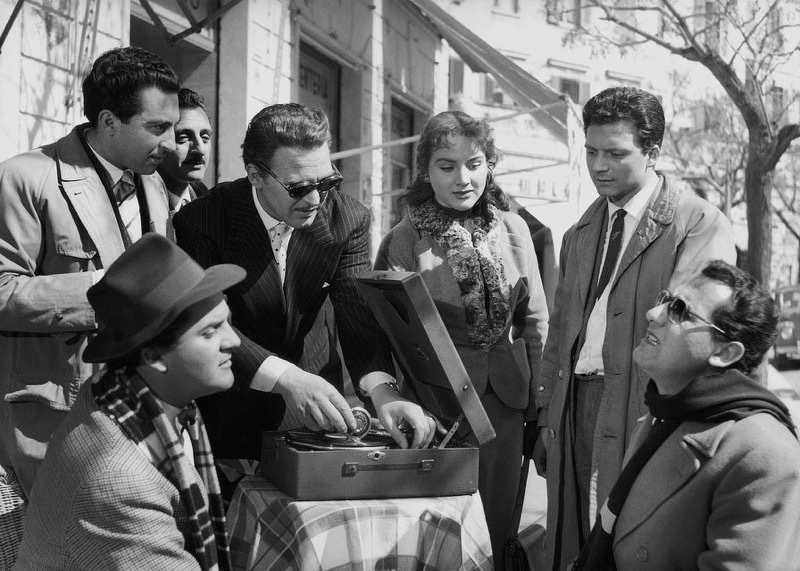
    Two major traditions are essential for understanding the filmmaker he became. One is the Italian neorealist cinema. Malick adores the early Fellini, especially The White Sheik (1952) and I Vitelloni (1953). He adores Rossellini, especially Voyage to Italy (1954). But then he also loves Elia Kazan and William Wyler and the massive widescreen blockbusters they made in the early years of Cinerama and CinemaScope. (Foster Hirsch’s Hollywood and the Movies of the Fifties is great on the development of these technologies.)

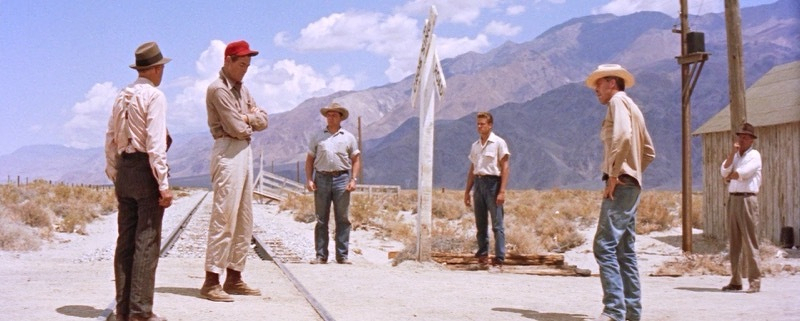
    And I believe — I don’t know that Malick has ever said this, but I am convinced — that there’s a good bit of John Sturges in Malick’s directorial DNA. P.T. Anderson has said — it’s a claim that has become notorious among cinephiles — that you could learn more from listening to John Sturges’s commentary on his 1955 film Bad Day at Black Rock than you could learn in twenty years of film school. And that commentary — here and here — is actually very interesting and wide-ranging. Bad Day at Black Rock is one of the very first CinemaScope films, and Sturges is the director who first figured out how you could make that wide aspect ratio work for you as a serious storyteller. It required thinking in new ways about composition, and (Sturges thought) about the freedom of the viewer to direct his or her attention. 

    Sturges11 blackrock.

    But I digress … a little. We’ll return to some of this material in future posts. 

    In any case, those are the two major strands of influence on Malick: Italian neorealist cinema in black & white, with its emotionally intense explorations of (especially) family life; and the intensely colorful widescreen Hollywood films of the 1950s, especially by Kazan and Sturges. And I think if you put together sweeping dramatic landscapes and emotionally intense depictions of family life, well, then you kind of have Days of Heaven, The Tree of Life, and A Hidden Life, don’t you?

    And Malick brings these influences together in his own inimitable way. Many years ago, when I was living in Chicagoland, I subscribed to Chicago magazine, my favorite part of which was the restaurant reviews. Each issue featured capsule reviews of dozens and dozens of restaurants, each of which had a tag to suggest the type of restaurant it was: Mexican or Italian or Thai or whatever. And then when you got to Charlie Trotter’s, the tag was: Trotter’s cuisine. What Trotter was doing was so distinctive, so unlike what anyone else was doing, that that was the only thing you could call it. And exactly the same is true of the movies Terrence Malick makes: it’s Malick’s cinema, indescribable by any conventional terms, within any conventional categories. You just have to get to know it.

    And I have gotten to know it very well. Most of that is a result of my simply watching the movies over and over again with a notebook in my lap, pausing occasionally to respond (with timestamps). I’ve been willing to do that over and over.

    However, it’s also true that when I got to see the cuts of A Hidden Life, I was introduced to The Process. I saw four versions of it, and while I am forbidden (by an NDA) to discuss the details of my experience, I can say this much: observing how the story developed, seeing and hearing (Malick’s films are as much aural as visual) the effects of editing, seeing and hearing the ways in which even seemingly small alterations can have massive reverberations, and then talking about everything with Malick and his editors — all that was extraordinarily illuminating. And I feel that that experience gave me a kind of right-brain, that is to say, genuine but not wholly expressible, insight into the gestalt of Malick’s cinema.

    It’s also true that Terry Malick and I have become friends in the years since then; I see him fairly regularly. But when we talk, we say very little about his movies, past or present. There are two reasons for that. One is that I figure he could use a mental break from his work. The other is that Terry is never Terry’s preferred topic of conversation. Like many artists, he doesn’t want to get overly analytical about what he does, because that doesn’t help. But also, he’s just not focused on himself. He’s more interested in the world, in other people. The last time I got together with him, the main thing he wanted to talk about was my recent biography of Paradise Lost, which he had just read and loved. (Maybe I shouldn’t say that, but I am frail. That one of the greatest living artists enjoys my writing makes my head swim a little. Sue me.) We talk about books, about the Monterey oaks we’ve planted in our respective yards, about unusual birds we have recently seen, about new cameras and new lenses that he’s been fooling around with. (As someone who knows him well has said to me: “Terry’s a gearhead.”) On occasion we sing together verses of hymns.

    I can’t claim that getting to know Terry has led to the revelation of secrets about his filmmaking that I can then put into my own words and post here on the site. It’s not like that. I do think that getting to know him has given me a feel for the work, but I’m not certain about that. And he has never, at any point, said anything remotely like “What I was trying to do in this scene was X.” And so, while getting to know him makes a difference to how I see his movies and how I’m going to be writing about them, it doesn’t do so in a way that I can specify. And now that I’m done with this blog post, I’m not going to say anything about it again. 

    → 7:50 PM, Apr 9
  • A Disposition

    Christian bale staring.

    A certain disposition to the world — possessed by some humans, though not many — leads to reflection. That reflection in turn leads to puzzlement, and the puzzlement may be formed into questions. Those questions may lead to answers, either tentative or assured.

    When the questions and answers are articulated, we call that articulation philosophy and the person who articulates a philosopher.

    When reflection and puzzlement do not find straightforward verbal form, the person who has this disposition may be called an artist or a mystic or something else entirely: a dreamer, perhaps. There are less complimentary terms. Not that the ones I’ve listed are invariably complimentary. 

    It is noteworthy that when Terrence Malick was still a philosopher he worked on a thinker who believed that philosophy, as professionally practiced, had lost its proper connection to the reflection which had prompted it. Philosophy had become homeless, and this thinker tried to bring it home. 

    But what if your doubts go deeper than that? What if you suspect that philosophy as such has always-already gone astray? What if verbal articulation is inevitably, necessarily misleading, unable to stand on its own, requiring the complementary or corrective presence of other forms or modes of response to the world — other forms or modes of encountering the world? 

    And what if one’s deepest conviction is that the world we encounter always transcends the perceptions and the categories available to us? That it always eludes and exceeds, that what we say is always partial? Then one might fall into silence and inaction. 

    Or one might strive for some total work of art that gives us the widest possible range of responses to both the presence and the elusiveness of the world. One might apprentice oneself to the discipline of making such art — and in so doing one might learn the inadequacies of its existing techniques. One might embark on a quest for ever-greater technical capability — and at the same time realize that even perfect technique is insufficient unless one’s vision corresponds to it, or the technique comes to correspond to that vision. 

    Such a person needs at one and the same time to acquire facility in all the parts of making such a work of art and to expand one’s perception: to shape in one’s mind a Cosmos as one shapes it in art, so that the thinking and the making reinforce each other. It is the discipline of a lifetime. 

    → 11:22 AM, Apr 3
  • Learning on the Job

    Malick — who later said that he decided to go to film school because it didn’t seem worse than any other option — was a member of the first class of students at the American Film Institute Conservatory. One of his classmates, David Lynch, said that his time there was “completely chaotic and disorganized, which was great … you quickly learned that if you were going to get something done, you would have to do it yourself. They wanted to let people do their thing.” Another member of that first class, Paul Schrader, reported that

    It was quite a moment that first year: no tuition, daily screenings, receptions four or five times a week with famous filmmakers. There were no structured classes, and I was the only critical studies Fellow…. I didn’t think it would last. It felt like a house of cards, and to a degree it was. Yet it survived.

    Malick himself has commented that while it was awe-inspiring to have a constant stream of titans visiting — Renoir, Fellini, Elia Kazan, Bergman — he didn’t actually remember, later on, what any of them said, with one exception: Kazan told the students that when you’re hiring extras you should always try to hire cops, because they’re used to being looked at and tend to have a personal presence. That was it; that was Malick’s one lesson from the Great Masters.

    In the end he made a 15-minute short to satisfy graduation requirements and went straight from that to writing his own feature, Badlands (1973). Looking back on that experience just three years later, he said,

    I felt woefully ignorant. For instance, one example of this is that I didn’t understand the importance of over-the-shoulder shots. You know, they’re corny, they’re television and everything, but I always thought, ‘Why have half the frame occupied with the back of somebody’s head?’ It’s just not interesting. You know, why do people shoot that way? It’s just like television, they do it by taste or something. They think that that’s interesting. Well, I don’t think so — only to find out in the editing room that those shots really situate you, and it’s important to be situated. If I’d done more than this one short I would have known that. I would have found that out very quickly in the editing room, but I didn’t until it was too late, until the picture was all over.

    Malick learned filmmaking by trial-and-error, one mistake at a time. He wrote and rewrote. Often after a day of shooting on The Thin Red Line (1998) he would return to his cabin or trailer to write new dialogue that he would give to the actors the next morning. He learned fast; he iterated, again and again. He still does.

    He experiments constantly with narrative strategies, with lighting, with composition, with the rhythms of editing. His style of filmmaking has become increasingly sophisticated, but it is, fundamentally, handmade: he became a tactical bricoleur. He improvises, he tries the untried. He always surprises us, and probably surprises himself.

    It’s difficult for someone who graduated from Harvard to be an outsider artist, but in many ways Malick is. His connections to the big Hollywood studios have always been tentative and distant; he approaches them when necessary but whenever possible goes his own way. He is one of the great American originals.

    → 7:50 PM, Apr 2
  • Coming soon…

    → 3:54 PM, Apr 2
  • RSS
  • JSON Feed